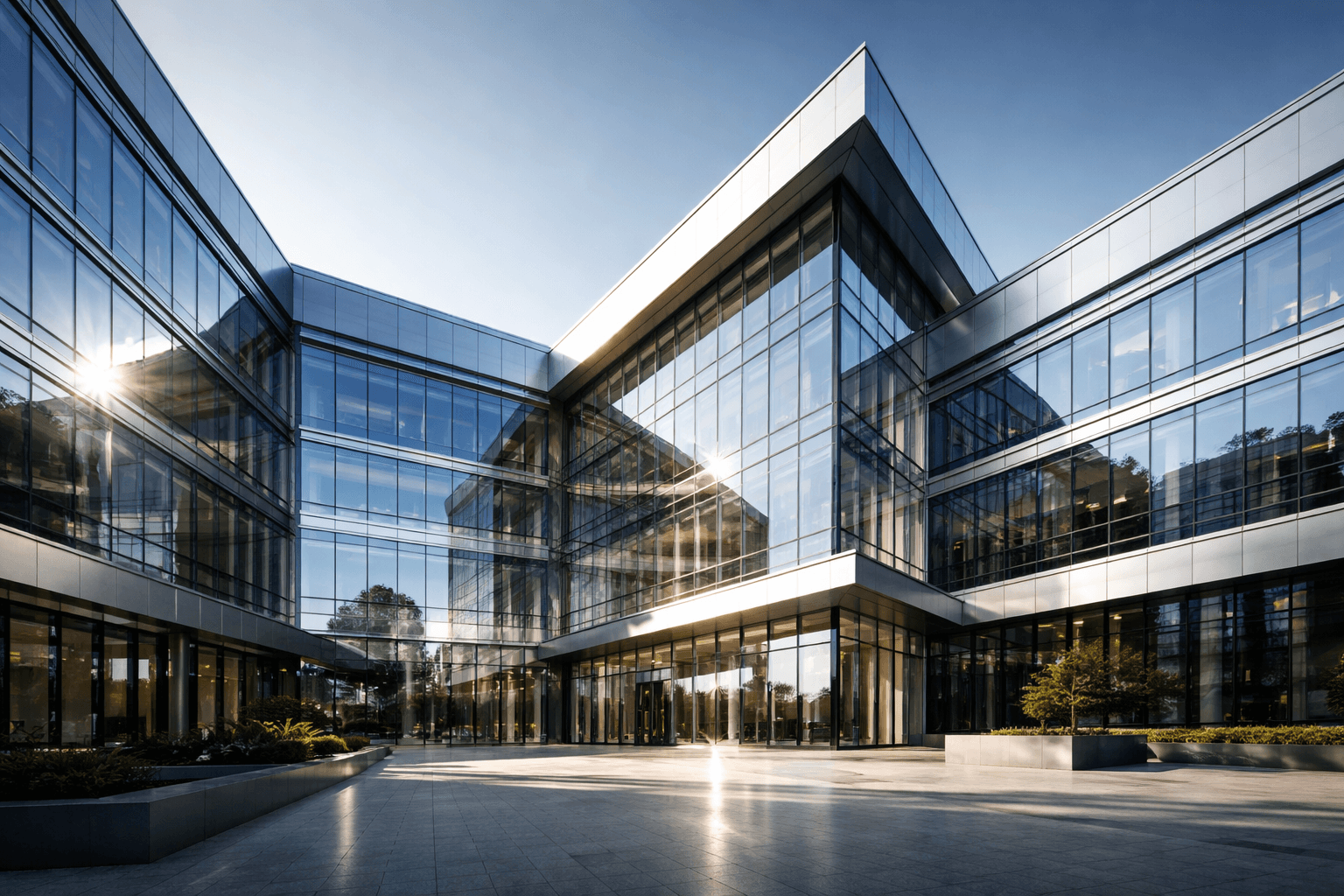
5 Key Factors That Determine the Lifespan of Your Building Facade
5 Key Factors That Determine the Lifespan of Your Building Facade
A well-designed and maintained facade should last the full life of the building — typically 40 to 60 years. Yet premature failures cost the global construction industry billions annually. Here are the five factors that matter most.
1. Material Selection & Specification
Every facade material has a performance envelope. Powder-coated aluminium will hold its colour for 20–25 years in moderate climates, but UV-intense Gulf environments demand PVDF (Kynar) coatings with proven 30-year warranties. Similarly, choosing the wrong glass interlayer can lead to delamination, and specifying standard silicone instead of a structural grade will compromise the bond over time.
Pro Tip: Always request third-party test data — weatherometer results, salt-spray tests, and fire certifications — rather than accepting manufacturer claims at face value.
2. Design Detail & Drainage
Water is the enemy of any facade. Proper sill slopes, weep holes, and compartmentalised drainage planes prevent moisture from tracking inward. Poor detailing at window-to-cladding junctions or parapet flashings is the single most common cause of early facade deterioration.
Pro Tip: Commission a mock-up water-penetration test (ASTM E1105 or BS 6375) before full installation begins.
3. Quality of Installation
Even the best-specified system fails if installation is poor. Common site errors include:
A robust quality assurance programme — with third-party inspection at critical stages — is non-negotiable on any significant facade project.
4. Environmental Exposure
Coastal environments expose facades to chloride-laden sea spray that accelerates corrosion of fixings and frames. Industrial zones introduce sulphur dioxide and particulates that degrade sealants and coatings. High-altitude sites face greater UV radiation and thermal cycling.
Understanding the microclimate of your site and specifying materials accordingly is essential. For example, marine-grade stainless steel fixings (A4 / 316L) should always be used within 1 km of the coast.
5. Maintenance Regime
Even a perfectly specified and installed facade degrades without maintenance. A Facade Inspection and Maintenance Plan (FIMP) should include:
Neglecting maintenance doesn't just shorten facade life — it creates safety risks. Loose glass panels or corroded fixings can become projectiles in high winds.
Sunwin Facade Building Solutions offers post-handover facade maintenance contracts tailored to the specific systems we install. Reach out to our team to learn how we protect your investment for decades to come.
Why Curtain Wall Systems Are the Gold Standard for Commercial High-Rises
Curtain walls separate a building's structural frame from its exterior skin, offering unmatched flexibility in design and outstanding weather resistance. Here's everything you need to know.

Aluminium Composite Panels: A Complete Guide for Architects & Builders
ACP cladding is one of the most versatile facade materials available today. This guide covers panel types, fire ratings, installation best practices, and how to choose the right system for your project.
The Future of Glass Facades: Trends Shaping Modern Architecture
From dynamic solar-control glazing to self-cleaning coatings, explore the innovations transforming glass facade systems and why they matter for sustainable urban development.